The Hidden Differences in Plastic Drums: Why Different Profiles Matter More Than You Think
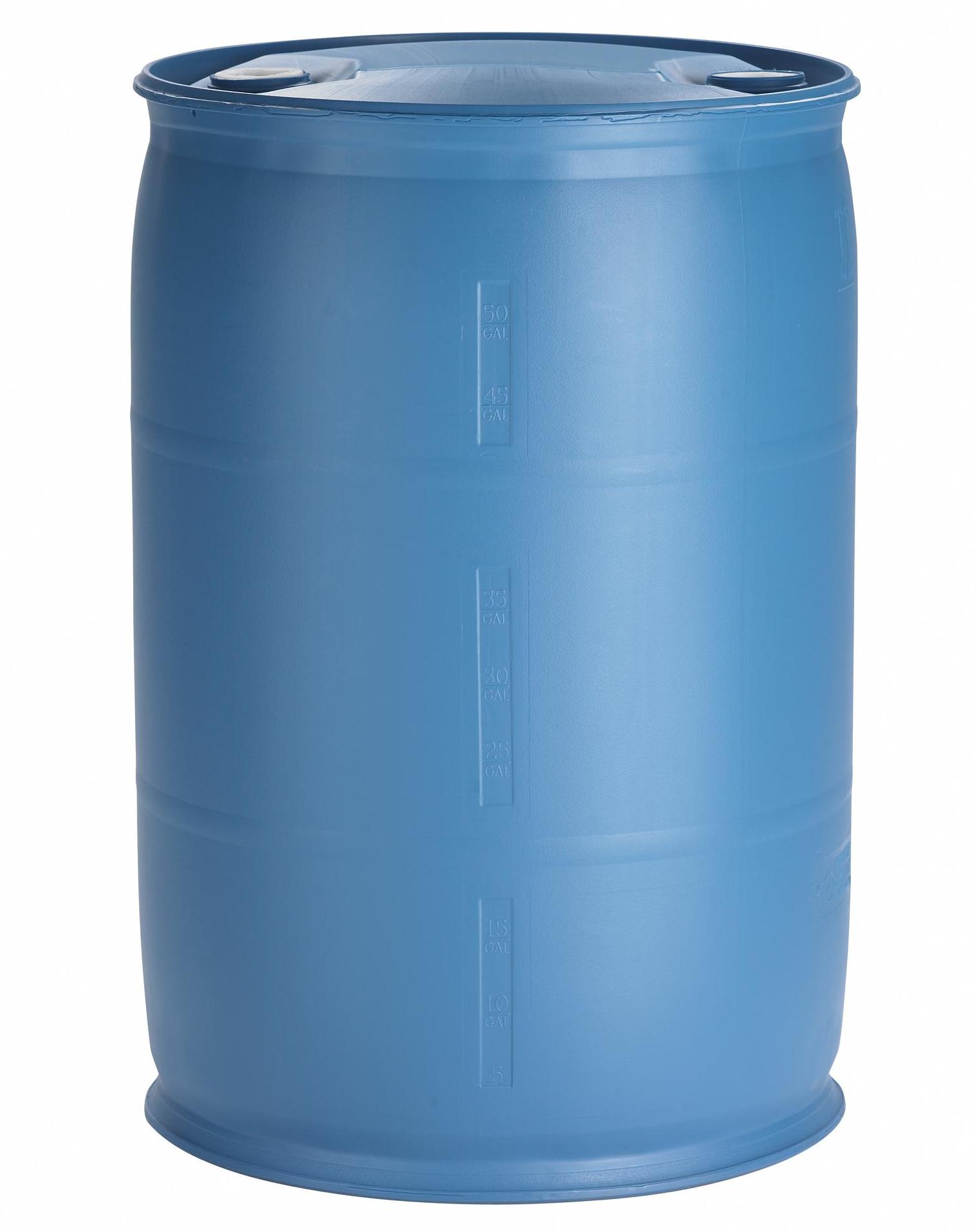
The blue 55-gallon plastic drum has been a workhorse of industrial packaging for more than five decades. Its origins trace back to the 1950’s and 1960s, as modern plastics like high density polyethylene became commercially viable, and the first 15-gallon plastic drum was introduced as an alternative to glass carboys housed in cumbersome wooden crates.
Not long after, the now-familiar 55-gallon plastic drum emerged, quickly becoming the globally accepted standard for the shipping and transportation of liquid materials. In 1967, Mauser Packaging Solutions entered the market, helping to advance plastic drum technology and shape many of the structural innovations still in use today.
Why are they traditionally blue?
Over time, the blue 55-gallon drum became instantly recognizable across industries and geographies. While there are many theories behind the rise of blue as the default color, one commonly cited explanation is performance-driven: blue pigments help absorb and scatter ultraviolet (UV) rays, reducing sunlight penetration and protecting the plastic from degradation.
Regardless of its origins, blue has evolved into a visual shorthand for durability and reliability!
Different Profiles for Different Applications
While most industrial drums look similar at a distance, their structural profiles are engineered for different uses. One question we hear often is, “What’s the difference between an L1, L2 and ISO plastic tight-head drum?”
Understanding the Different Profiles
The “L” in L1 and L2 stands for “L-Ring,” a structural feature molded into the drum that enhances its structural integrity.
L1
L1 drums feature a single L-Ring located at the top of the drum. The design provides dependable performance for a wide range of UN and non-UN rated applications. It remains the most common choice for a wide variety of applications.
- Key Characteristics:
- Single L-Ring at top of the drum
- Available in sizes ranging from 30G – 55G
- Rolling hoops on drum body provide structural strength and integrity
- UN-rated
L2
L2 drums build on the L1 design by incorporating an additional L-Ring at the bottom of the drum. This second ring significantly enhances overall strength and stability of the container. As industrial environments become more demanding, the L2 profile provides enhanced impact resistance and stability.
- Key characteristics:
- L-Rings at both the top and bottom of the drum
- Enhanced strength and structural stability
- Rolling hoops on the drum body
- Available in 55-gallon capacity
ISO
ISO drums are engineered with global logistics in mind, particularly for international and overseas shipping. Their straight-sided design allows for optimal use of space within sea containers, helping maximize payload efficiency.
- Key characteristics:
- Designed specifically for use in shipping containers and export applications
- Straight-sided construction with no rolling hoops
- Optimized for space utilization in ocean freight
- Available with higher UN performance ratings depending on configuration
For high-volume exporters, the shift to an ISO profile isn’t just a packaging choice, it’s a payload optimizations strategy that can help reduce the carbon footprint and shipping costs of a global supply chain.
Designed with Purpose, Backed by Experience
Choosing the right plastic drum goes beyond size or appearance, it requires an understanding of how and where the drum will be used. Is the priority vertical stacking in a domestic warehouse, or is it the payload density of a 40-foot export container?
By understanding the differences between L1, L2, and ISO drums, businesses can select packaging that aligns more closely with their supply chain requirements which helps ensure protection, efficiency, and peace of mind at every step.
With decades of experience and a global manufacturing footprint, Mauser Packaging Solutions offers a portfolio of plastic drums designed to meet today’s operational needs while anticipating tomorrow’s challenges.